
Case Study By Ranktriz
Rebuilding Shopify SEO for a Furniture Brand Across Pakistan and UAE
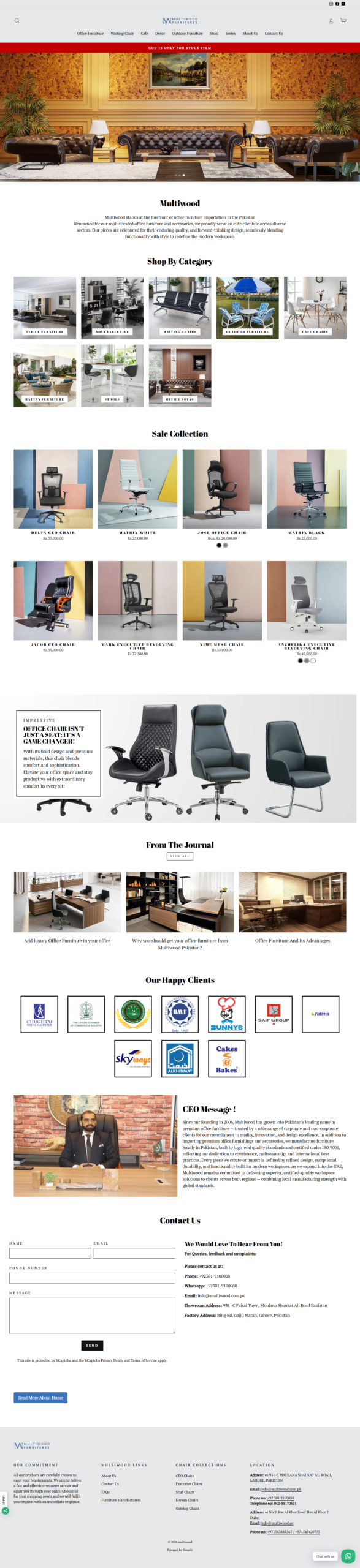
We helped an established furniture ecommerce brand rebuild its organic search presence across two separate Shopify stores serving Pakistan and UAE.
The brand’s rankings and organic visibility had started declining. However, the problem extended beyond keywords. Both stores needed improvements across their website structure, product organization, collection pages, content, metadata, schemas, internal links, backlinks, speed, and overall shopping experience.
Project Overview
Industry: Furniture and Ecommerce
Markets: Pakistan and UAE
Website Platform: Shopify
Engagement: SEO and Shopify Optimization
Primary Focus: Organic Visibility, Store Structure, Content and User Experience
The project covered two separate Shopify stores operating under the same furniture business. Although both websites offered furniture products, they served different markets and competed in different search environments.
We needed to create a connected strategy while giving each store the individual attention its market required.
The Challenge
The furniture brand already had established websites and a broad product catalogue. However, search performance had started moving in the wrong direction.
- Rankings were dropping, important pages lacked clear targeting, and the existing store structures did not always guide search engines or customers towards the most valuable collections.
- The problem was not limited to one technical error or one group of keywords.
- Product categorization needed improvement. Some collections overlapped with similar pages, while other commercially valuable categories lacked enough information to compete effectively.
- Page titles and meta descriptions did not always reflect the strongest search opportunities. Structured data required review, and internal links did not consistently connect related products and collections.
- Duplicate content also made it harder for search engines to understand which pages deserved greater visibility.
- Beyond SEO, the stores needed improvements in speed, visual presentation, page layout, and overall usability. The UAE store also required better promotional graphics and banners that matched its market and ecommerce experience.
- The backlink profiles presented another area that needed careful evaluation. We needed to understand which links supported the websites and which patterns could limit their authority.
Because the stores served different regions, copying one strategy from one website to the other would not have worked. Each market required its own research, priorities, content direction, and competitive approach.
The Audit
We began with a complete audit of both Shopify stores.
Google Search Console helped us examine clicks, impressions, rankings, search queries, landing pages, and changes in organic performance. We used Semrush and other SEO tools to study competitors, keywords, backlinks, content gaps, and technical issues.
The audit covered the entire ecommerce environment rather than treating every problem separately.
- We reviewed how products were categorized, how collections related to one another, how customers navigated the stores, and how search engines discovered important pages.
- We also examined page titles, meta descriptions, headings, content quality, schema markup, internal links, duplicate pages, website speed, user experience, and backlink relevance.
- This process helped us identify where visibility was being lost and where new organic opportunities existed.
Instead of making random changes, we used the findings to build a prioritized strategy for both stores.
Strategy By Ranktriz
The Approach
01 — Market-Specific SEO Planning
Pakistan and UAE presented different search behaviours, product demand, competition, and customer expectations. We created an individual SEO direction for each store while maintaining a consistent strategic foundation across the wider project. Keyword research focused on how customers searched for furniture categories, product types, styles, materials, and buying options within each market.
We used this research to decide which existing pages needed improvement, which categories needed clearer targeting, and where new pages or products could expand the stores’ organic reach. This allowed each website to compete within its own market instead of relying on one duplicated strategy.
02 — Shopify Store Restructuring
The existing store structures needed to provide clearer relationships between products, collections, and important commercial categories. We reviewed the product catalogue and reorganized key sections to improve both search relevance and customer navigation.
Products were placed into more suitable collections, overlapping categories were reviewed, and the wider hierarchy was refined.
Where important product groups did not have a suitable landing page, we planned new collections around real search demand. The improved structure helped search engines understand the stores more clearly. It also allowed customers to move through categories without facing confusing or repetitive paths.
03 — Product Categorization and Listings
A large furniture catalogue can quickly become difficult to manage when products are not categorized consistently.
We reviewed existing listings and improved the way products were grouped across the stores.
New products were created and uploaded where catalogue development supported the SEO strategy. Product information was organized more clearly, and important listings received stronger search targeting.
The purpose was not to publish products simply to increase the catalogue size. Each listing needed to support a relevant category, customer need, or search opportunity.
04 — Collection and Website Content
Many ecommerce websites rely heavily on product grids while providing little useful information around their collections.
We rewrote content across important sections of the stores to improve relevance, clarity, and customer understanding.
Collection content was developed around the products available, the intent behind each search, and the information customers needed before exploring individual items.
We avoided filling pages with unnecessary text. Instead, the content was structured to introduce the category, explain relevant options, and support the shopping journey.
The content also gave search engines more context about the purpose of each collection page.
05 — Custom Shopify Content Sections
The existing Shopify setup did not always provide enough flexibility for placing useful SEO content without affecting the store design.
To solve this, we created new Shopify sections that allowed optimized content to be uploaded in more suitable areas of the pages.
These sections helped us maintain a clean product-first experience while still giving important collections enough information to compete in search.
Because the sections were created within Shopify, they also made future content updates easier to manage.
This connected the SEO strategy with the actual website experience instead of treating content as an external document that never reached the live store.
06 — Metadata and Schema Optimization
We reviewed page titles and meta descriptions across important collections, products, and supporting pages.
Metadata was rewritten to improve relevance while giving searchers a clearer reason to visit the stores.
We also audited existing structured data and schema implementation. Product information, page relationships, and other relevant signals were reviewed to help search engines interpret the websites accurately.
These improvements supported stronger search presentation and created a cleaner technical foundation for future growth.
07 — Duplicate Content Removal
Duplicate and overlapping content can divide authority between pages that should not be competing with one another.
We identified unnecessary duplication across product information, collection content, metadata, and similar pages.
Where possible, competing pages were consolidated, rewritten, redirected, or given a clearer individual purpose.
This helped reduce confusion and allowed stronger pages to receive more focused internal and search authority.
It also made the stores easier to maintain as new products and collections were introduced.
08 — Internal Linking Improvements
Internal links play an important role in ecommerce SEO because products and collections can otherwise become isolated within a large catalogue.
We created stronger connections between relevant categories, products, and supporting content.
Links were added according to relevance and customer behaviour instead of being inserted simply for SEO.
This helped search engines discover important pages and understand how different areas of the stores related to one another.
It also gave customers more useful ways to explore related furniture options.
09 — Backlink Profile Audit
We audited the backlink profiles to understand which external websites were contributing to the stores’ authority.
The review considered relevance, quality, anchor text, link patterns, and potential risks.
This allowed us to distinguish meaningful backlinks from links that provided little value.
We then used the findings to create a more focused authority-building direction around relevant websites, business mentions, and industry opportunities.
The goal was to strengthen authority naturally rather than increase backlink numbers without considering quality.
10 — Website Speed and User Experience
Search visibility alone does not create a successful ecommerce website. Customers still need a fast and convenient shopping experience after arriving.
- We reviewed website speed, navigation, mobile usability, page layouts, product presentation, and important customer paths.
- Heavy or unnecessary elements were reviewed, and interface improvements were introduced to make the stores easier to browse.
- We also refined the visual hierarchy so that products, categories, offers, and important actions were easier to understand.
- For the UAE market, we worked on promotional banners and graphics that supported the store’s visual presentation. These assets were designed to feel connected to the interface rather than appearing as unrelated advertisements.
The objective was to create a better balance between organic search performance and the experience customers received after clicking.
Performance Growth
The performance data shows the effect of improving multiple parts of the ecommerce system together.
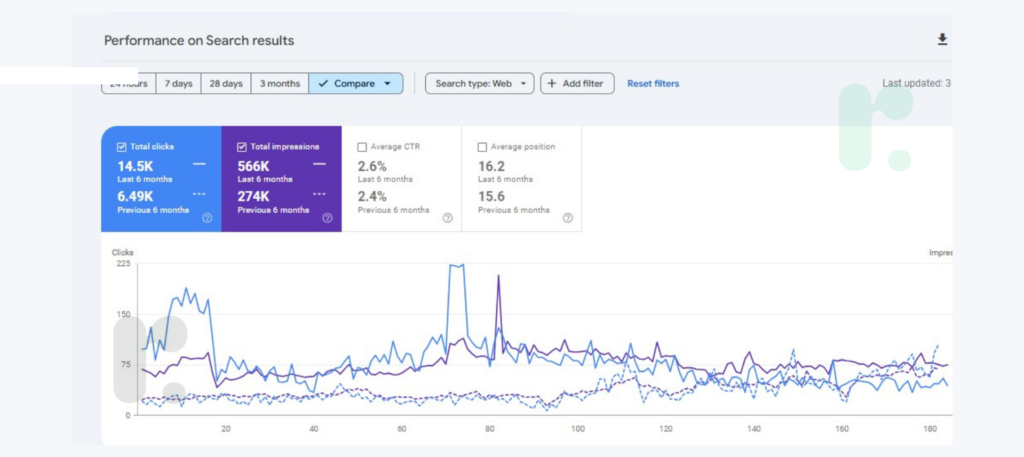
During one directly comparable six-month reporting period, organic clicks increased from 6.49K to 14.5K.
That represents an increase of approximately 123.4%.
Search impressions increased from 274K to 566K during the same comparison, representing growth of approximately 106.6%.
The average click-through rate also improved from 2.4% to 2.6%.
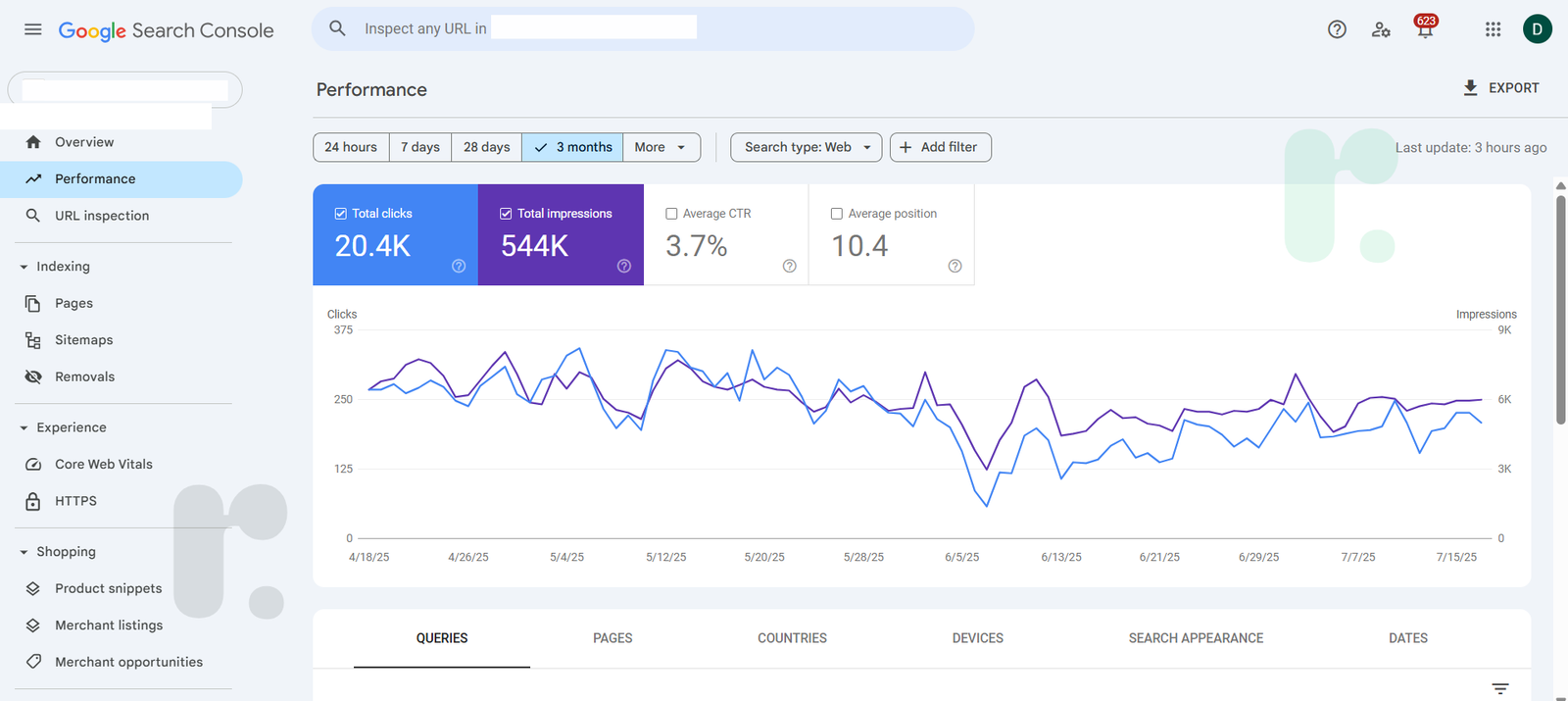
Other reporting views across the engagement recorded 20.4K organic clicks and 544K impressions within three months, alongside a 3.7% click-through rate and an average position of 10.4.
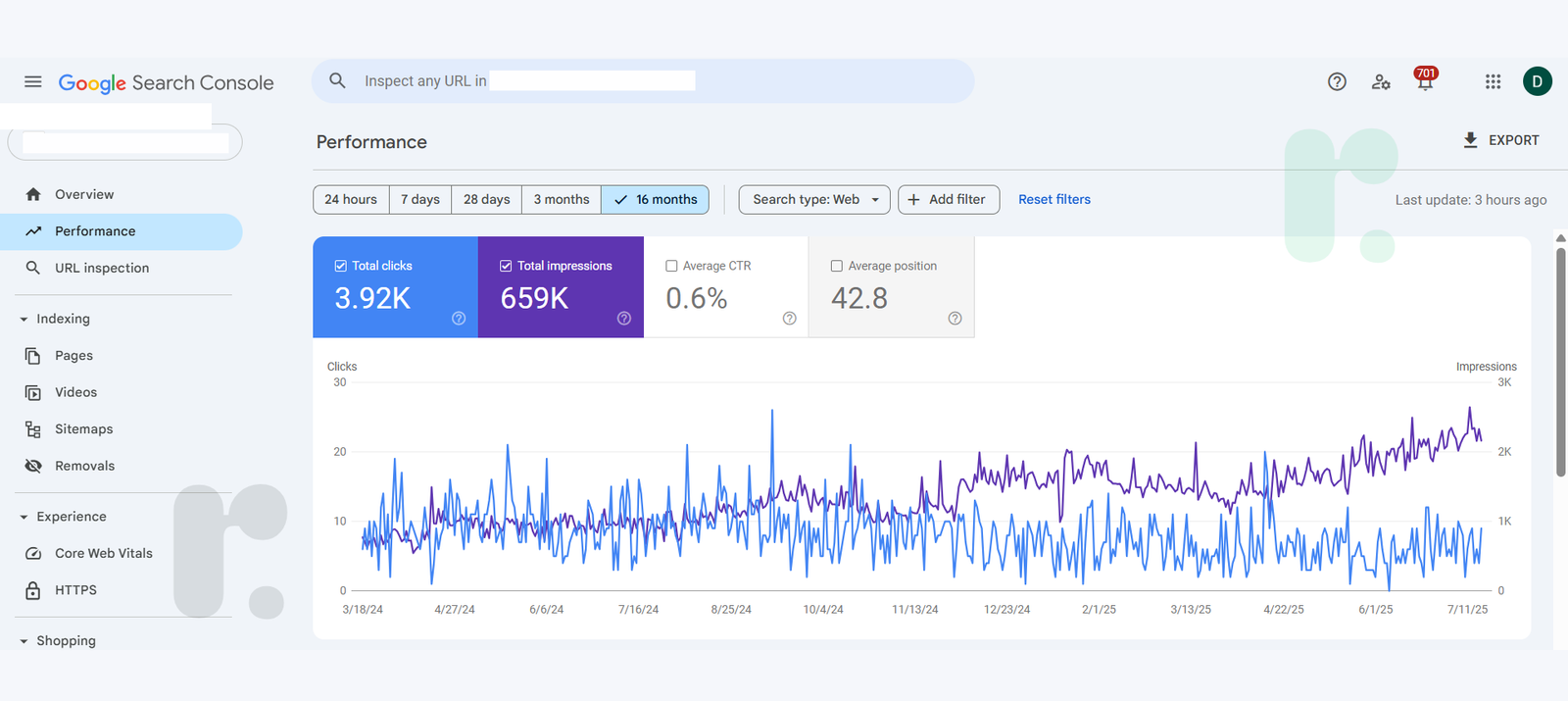
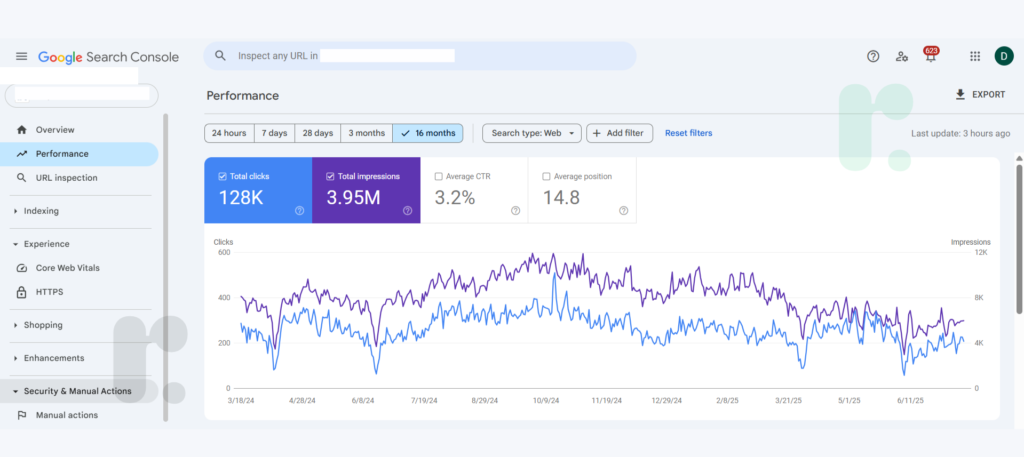
A longer performance view recorded 128K clicks and 3.95 million impressions across 16 months.
These results show both the scale of the existing organic presence and the measurable growth achieved through the wider optimization strategy.
Key Results at a Glance
Organic clicks: 14.5K compared with 6.49K
Click growth: Approximately 123.4%
Search impressions: 566K compared with 274K
Impression growth: Approximately 106.6%
Click-through rate: Increased from 2.4% to 2.6%
Three-month performance: 20.4K clicks and 544K impressions
Long-term performance view: 128K clicks and 3.95 million impressions
Markets supported: Pakistan and UAE
Platform: Shopify
Performance figures represent different reporting views captured during the engagement. Results are specific to this project and do not guarantee identical outcomes for other ecommerce businesses.
The Outcome
The project gave the furniture ecommerce brand a stronger foundation across both Shopify stores.
- What began as a response to declining rankings developed into a complete review and improvement of the brand’s organic search environment.
- Products were organized more clearly. Collections received stronger targeting and useful content. Duplicate pages were reduced, metadata was improved, schemas were reviewed, and internal links connected important areas of the stores.
- New Shopify sections made content easier to implement without compromising the shopping experience. Website speed and interface improvements created a more polished path from organic search to product discovery.
- The backlink audits also gave the brand a clearer understanding of its external authority and where future link-building efforts should be focused.
- Most importantly, Ranktriz did not stop after delivering an audit document.
- We created the strategy, rewrote the content, implemented the Shopify changes, organized products, improved the interface, and measured progress through real search data.
The result was a more structured and competitive ecommerce presence designed to support continued growth across two different markets.
Ranktriz
Is Your Shopify Store Losing Organic Visibility?
Declining rankings are rarely caused by one missing keyword or one technical issue. Ranktriz helps ecommerce businesses identify what is restricting growth and turn those findings into a strategy that can be implemented, improved, and measured.
- Clear strategy
- Connected execution
- Measurable performance